 Nederlands
 Deutsch
 Español
  Français
 English
Bathroom Vanity Mirror Trends in the U.S. Market: A Manufacturer’s Perspective
Bathroom Vanity Mirror Trends in the U.S. Market: A Manufacturer’s Perspective
111The United States bathroom fixtures market is undergoing a significant transformation, driven by a demand for functional luxury and smart home integration. For distributors, wholesalers, and hotel project managers, understanding these shifts is crucial for inventory planning and project specification. As a manufacturer, we observe a clear transition from standard reflective glass to multifunctional, tech-integrated solutions that enhance user experience while meeting strict safety standards.
The Rise of Smart LED Integration
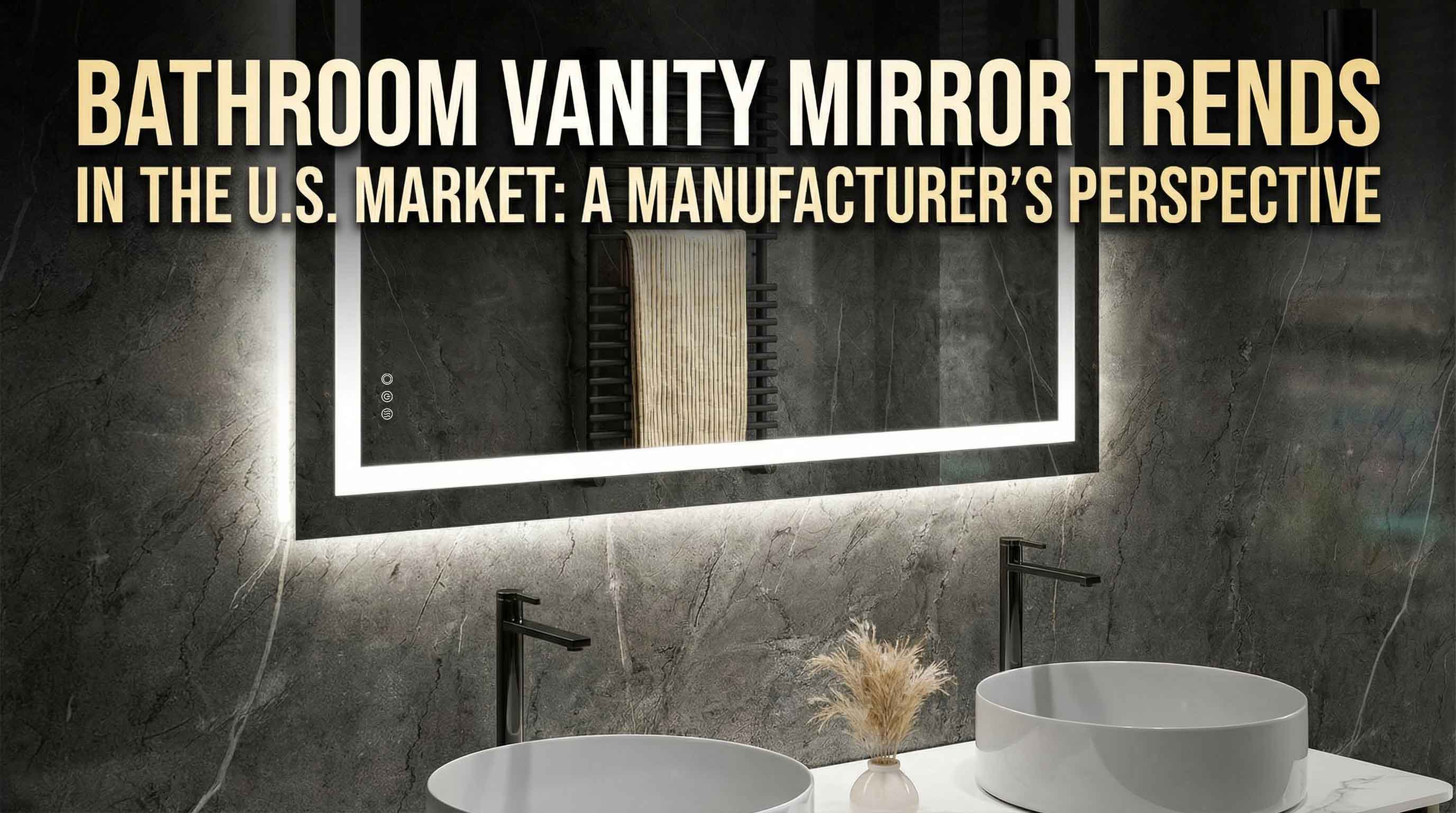
The most dominant trend in the U.S. market is the widespread adoption of LED technology. Modern consumers and hospitality clients no longer view lighting as a separate entity from the mirror. Integrated LED lighting, specifically backlit and front-lit designs, provides shadow-free illumination essential for grooming. The demand is particularly high for mirrors featuring adjustable Color Correlated Temperature (CCT), allowing users to switch between warm (3000K) for relaxation and cool daylight (6000K) for precision tasks.
Minimalist and Frameless Aesthetics
Contemporary interior design in the U.S. favors clean lines and uncluttered spaces. Consequently, frameless designs are surging in popularity. These mirrors create a "floating" effect and blend seamlessly with various architectural styles, from industrial lofts to modern farmhouses. When sourcing a high-quality Bathroom Vanity Mirror for luxury residential or commercial projects, the frameless aesthetic offers versatility that appeals to a broad demographic, reducing the risk of style obsolescence for distributors.
Anti-Fog and Demister Technology
Functionality is paramount in the North American market. The inclusion of anti-fog pads (demisters) has moved from a premium add-on to a standard expectation, especially in the hospitality sector. These heating elements, applied to the back of the mirror, prevent condensation buildup during hot showers. For B2B buyers, stocking mirrors without this feature can be a competitive disadvantage, as end-users increasingly prioritize convenience and low-maintenance surfaces.
Shift Towards Organic and Irregular Shapes
While rectangular mirrors remain a staple for volume orders, there is a growing niche for organic shapes. Capsule (pill-shaped), arched, and irregular pebble shapes are trending in boutique hotels and high-end residential renovations. These forms add a soft, artistic element to the bathroom, breaking the rigidity of tiled walls and cabinetry. Manufacturers are adapting cutting technologies to produce these custom shapes efficiently to meet bulk order requirements.
Sustainability and Copper-Free Glass
Environmental consciousness is influencing material sourcing. The U.S. market is increasingly demanding copper-free mirrors, which are more resistant to corrosion and black edge spots compared to traditional silver mirrors containing copper. Furthermore, copper-free manufacturing processes are less harmful to the environment. Combined with energy-efficient LED components, these sustainable products align with LEED certification requirements for green building projects.
Market Comparison: Traditional vs. Smart Mirrors
| Feature | Traditional Vanity Mirror | Modern Smart LED Mirror |
|---|---|---|
| Lighting Source | External fixtures required | Integrated LED (Dimmable/CCT) |
| Fog Resistance | None (prone to condensation) | Built-in Demister Pad |
| Durability | Standard silver coating | Copper-free, corrosion-resistant |
| U.S. Market Demand | Declining (Budget sector only) | High Growth (Residential & Hospitality) |
Frequently Asked Questions
1. What safety certifications are required for selling LED mirrors in the U.S.?
For the U.S. market, electronic components in bathroom mirrors must generally meet UL (Underwriters Laboratories) or ETL (Intertek) standards to ensure electrical safety in damp environments.
2. Why are copper-free mirrors preferred by U.S. distributors?
Copper-free mirrors offer superior resistance to humidity and oxidation, significantly reducing the occurrence of "black edge" corrosion. This results in a longer product lifespan and fewer warranty claims.
3. Can smart mirrors be hardwired into existing bathroom electrical systems?
Yes, most professional-grade LED mirrors are designed for hardwiring to be controlled by a wall switch, though many also include plug options for easier installation in retrofits.
4. What is the current trend regarding mirror shapes in hotel projects?
While rectangular mirrors are standard, there is a strong trend toward backlit round and capsule (oval) shapes to create a more modern, luxurious ambiance in hotel bathrooms.
5. Do smart mirrors support Bluetooth connectivity?
Yes, many high-end models now feature Bluetooth speakers and time/temperature displays, catering to the tech-savvy consumer demographic in the U.S.


